Industry Standards for Cabinet Refinishing
What Homeowners Should Expect from a Professional Cabinet Painter
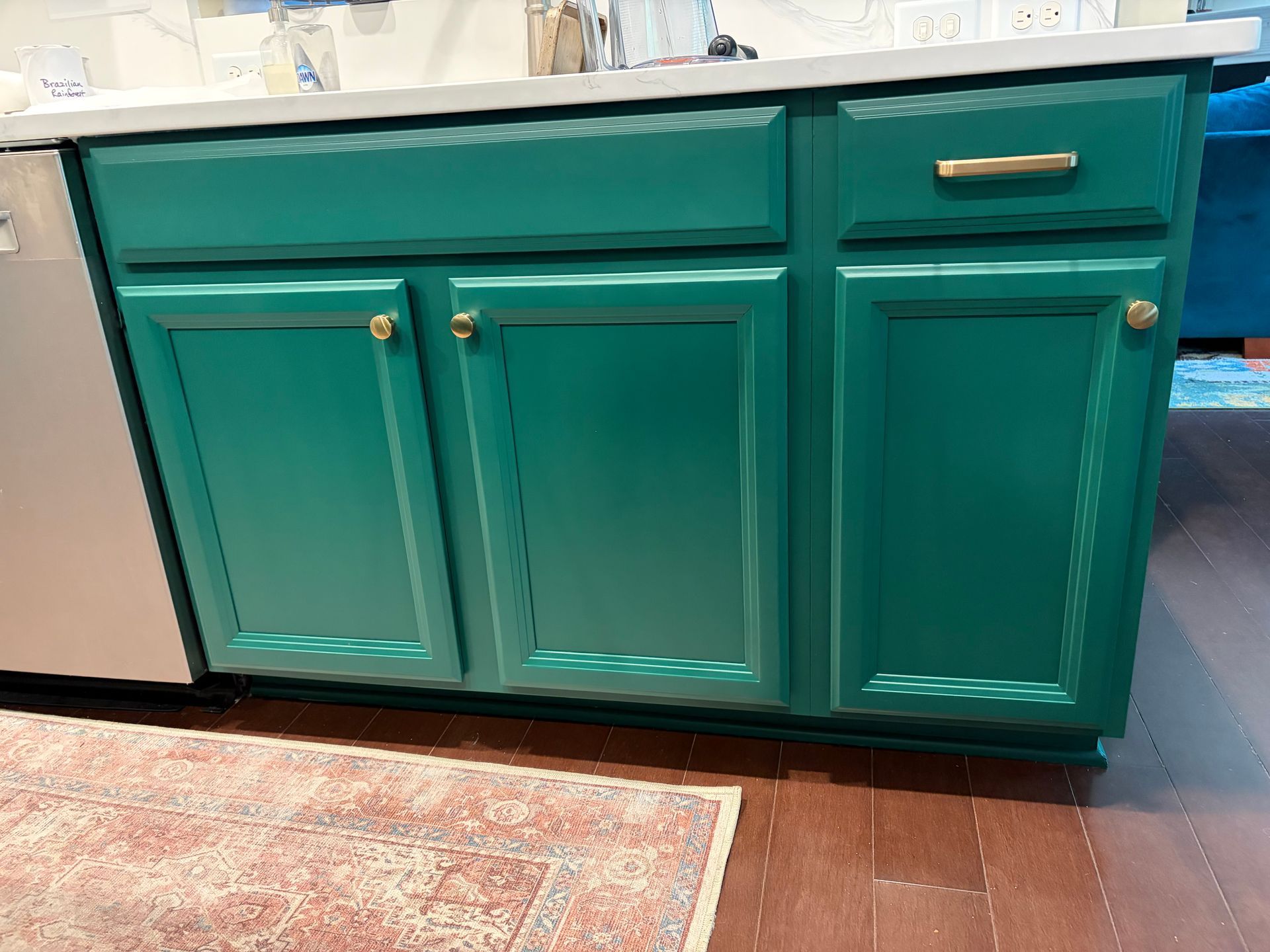
Cabinet refinishing has evolved from a budget-friendly alternative to replacement into a highly specialized trade with defined procedures, performance coatings, and measurable quality benchmarks. One of the most important (and often overlooked) frameworks guiding quality in this industry comes from the Painting Contractors Association (PCA), which establishes standards for what constitutes an acceptable finish.
Understanding both general best practices and PCA-defined expectations allows homeowners to distinguish between a true professional finish and a short-term cosmetic job.
1. Surface Preparation: Where Quality Actually Begins
Any durable cabinet finish starts with meticulous surface preparation. This is not optional—it is foundational.
Industry-standard preparation should include:
- Thorough degreasing to remove oils, wax, and contaminants
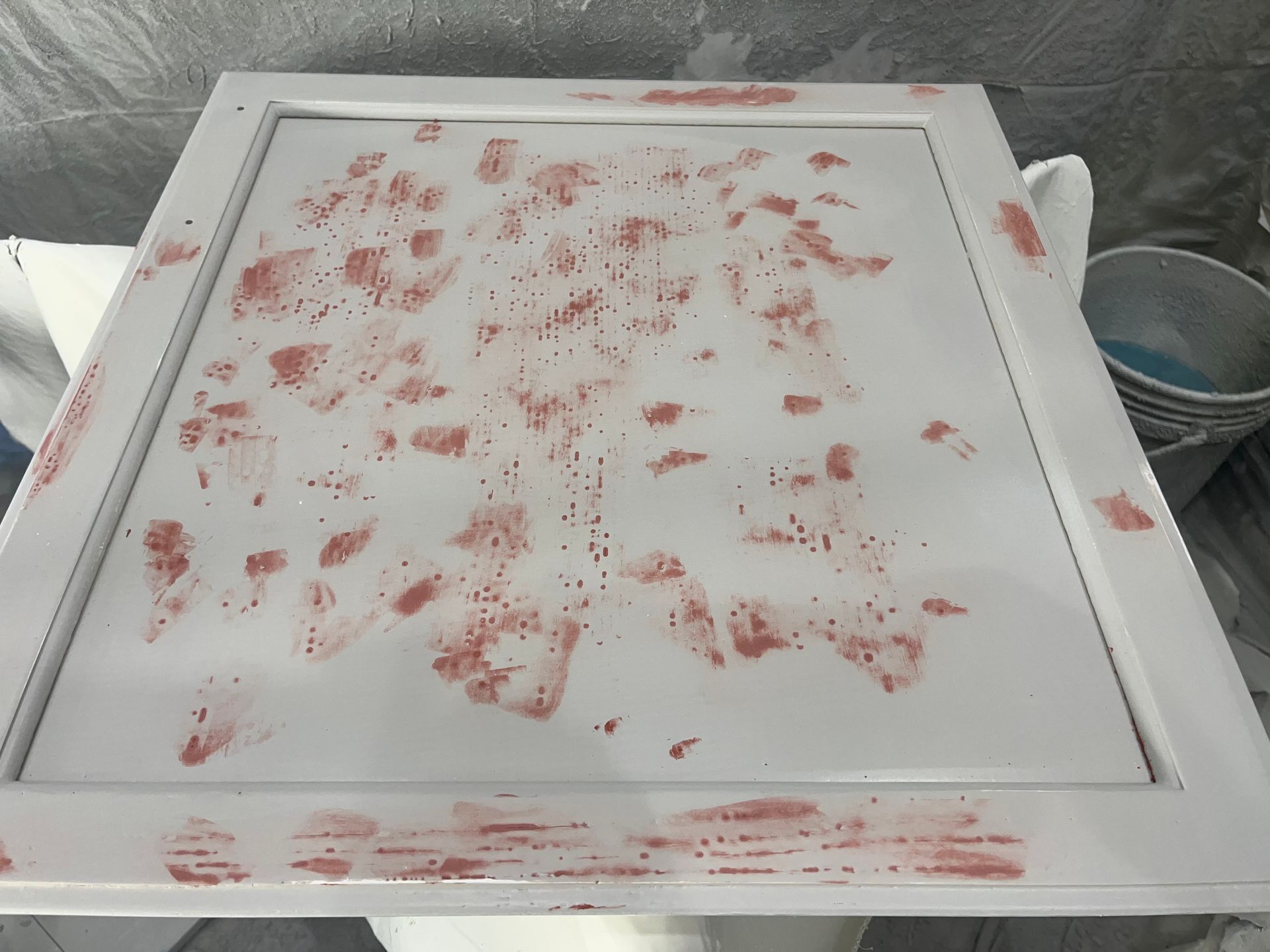
- Mechanical abrasion (sanding/scuff sanding) to create adhesion
- Repairs and filling of dents, imperfections and optional grain
- dust removal to eliminate fine particulates before coating
Professional shops rely on compressed air and vacuum systems in addition to manual wiping methods to ensure a contaminant-free surface. Residual dust is one of the leading causes of finish defects.
2. Primer Systems: The Foundation of Durability
Professional cabinet refinishing requires a dedicated bonding and/or blocking primer—not paint-and-primer-in-one products.
A proper primer system should:
- Bond to previously finished or slick surfaces
- Seal tannins and stains
- Provide a uniform substrate for topcoats
Skipping or downgrading primer is one of the fastest ways to compromise adhesion and long-term performance. At A La Carte Cabinet Painting we use ICRO 416 1 or 2k primer as our foundation for most of our projects.
3. Spray Application: The Industry Standard
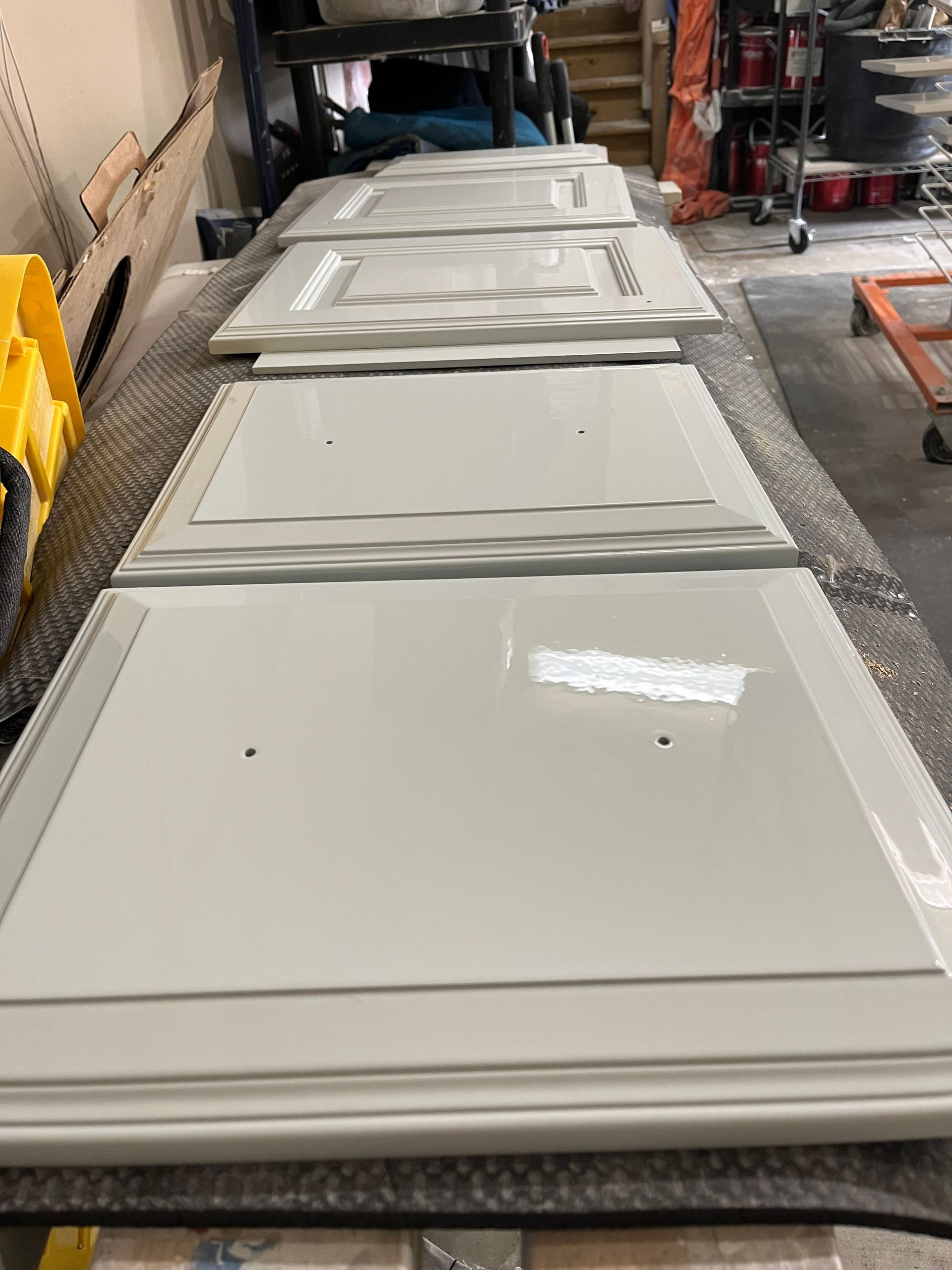
For cabinetry, spray application is the professional standard which is why, at A La Carte Cabinet Painting, all of our doors and drawers are ALWAYS professionally sprayed with Tritech fine finish tips. While spraying guarantees the most uniform factory-grade appearance, we give our clients the option to have their boxes hand rolled with high density foam as a budget-friendly application to the carcass only.
Benefits include:
- Smooth, uniform film build
- No brush or roller texture
- Consistent sheen across surfaces
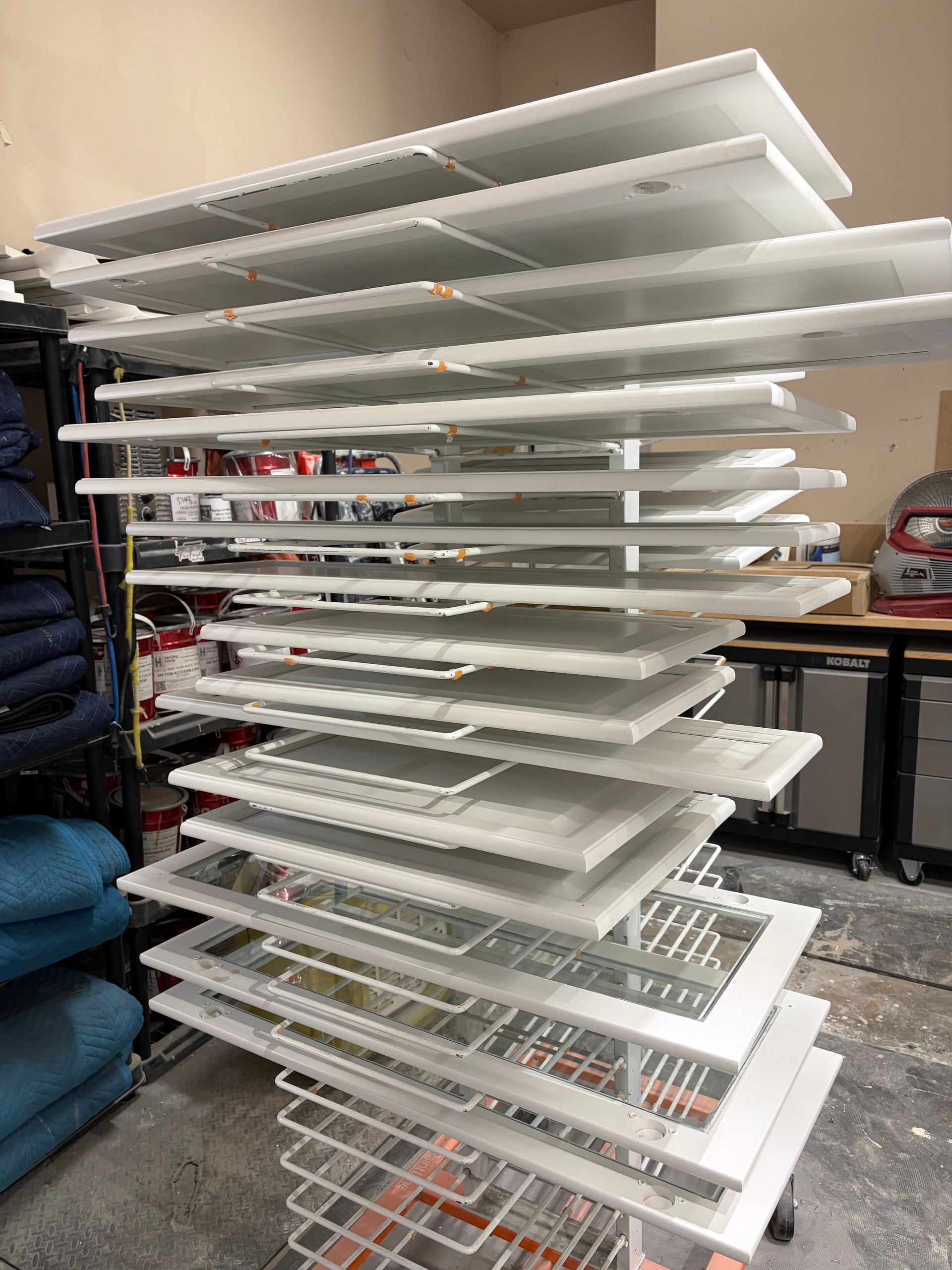
- Doors and drawer fronts should typically be removed and sprayed in a controlled environment to minimize contamination and maximize finish quality.
4. Coating Systems: Performance Matters
Cabinet coatings are fundamentally different from wall paints. High-performance systems are engineered for durability under heavy use. Common professional-grade systems include:
- Waterborne acrylic-alkyd hybrids (acts like an oil-based paint that cleans up with water; acceptable but not most durable)
- 1 & 2K (two-component) polyurethane coatings (specialized tougher finish designed for high abrasion & chemical resistance)
- Catalyzed lacquers (excellent durability, less chemical resistance and can crack over time)
- conversion varnishes (most durable, high-solids for heavy-use cabinetry
At A La Carte Cabinet Painting, we use ICRO 1k water-based polyurethane wood coatings and can add a non-isocyanate catalyst to projects for those requesting a 2k product.
ICRO coatings provide:
- Superior hardness and scratch resistance
- Moisture and chemical resistance
- Self-leveling properties for a refined finish
- UV resistance to prevent future discoloration
5. Controlled Environment & Cure Times
Environmental control is critical to achieving a consistent finish.
Industry expectations include:
- Temperature and humidity control during application
- Proper flash and dry times between coats
- Adequate curing time before stacking and reinstallation
A cabinet finish may feel dry quickly but often requires several days to weeks to fully cure to maximum hardness. ICRO wood coatings requires 7-10 days to fully cure but safest recommendation is to allow a full 21 days for cure process.
6. PCA Standards: What Defines a “Good Finish”
The Painting Contractors Association provides clear guidelines for evaluating painted surfaces. Cabinet refinishing typically falls under Level 4–Level 5 finish expectations, which represent high-end residential work.
Key PCA criteria homeowners should understand:
Finish Uniformity
- Color and sheen should be consistent across all surfaces
- No visible lap marks, flashing, or unevenness under normal lighting
Smoothness & Surface Quality
Minimal dust nibs or debris in the finish
No visible brush or roller marks (for sprayed finishes)
Orange peel should be minimal and consistent if present
Coverage & Hiding
Substrate should not show through
Edges and profiles should have full, even coverage
Defect Tolerance (Viewed Under Normal Conditions)
PCA standards specify that surfaces are evaluated:
From a normal viewing distance (typically 3–6 feet)
Under normal lighting—not harsh or angled inspection lighting
This means:
Minor, non-prominent imperfections may be acceptable
However, runs, sags, drips, or heavy texture are not acceptable
Clean Lines & Detailing
Crisp transitions between painted and unpainted areas
No overspray on adjacent surfaces
7. Reassembly & Final Detailing
The final phase is where craftsmanship becomes most visible.
Professional expectations include:
Precise door and drawer alignment
Proper hinge adjustment
Clean hardware installation
Final inspection and touch-ups
Consistency across all components—frames, doors, and drawer fronts—is essential.
8. What Homeowners Should Expect
When hiring a cabinet refinishing professional, you should expect:
A Clearly Defined Process
Including prep, priming, coatings, and curing—not just a price.
A Factory-Like Finish
Smooth, consistent, and free of major defects when viewed under normal conditions.
Durability Over Time
Cabinets should resist chipping, scratching, and household wear.
Realistic Timelines
High-quality work cannot be rushed without compromising results.
Alignment with PCA Standards
A professional should understand and work within recognized industry benchmarks.
9. Red Flags to Watch For
Claims of “no sanding required”
Use of standard wall paint on cabinetry
Brushing doors instead of spraying (without justification)
Extremely fast turnaround promises
Pricing significantly below market without explanation
No mention of industry standards like PCA
Final Thoughts
Cabinet refinishing is both a technical and detail-driven trade. When executed according to industry best practices and aligned with Painting Contractors Association standards, it delivers a finish that is not only visually impressive but also highly durable.
For homeowners, the takeaway is straightforward: a quality result isn’t just about the final look—it’s about the systems, standards, and discipline behind it.
Share Post