By Heather Perkins
•
December 5, 2025
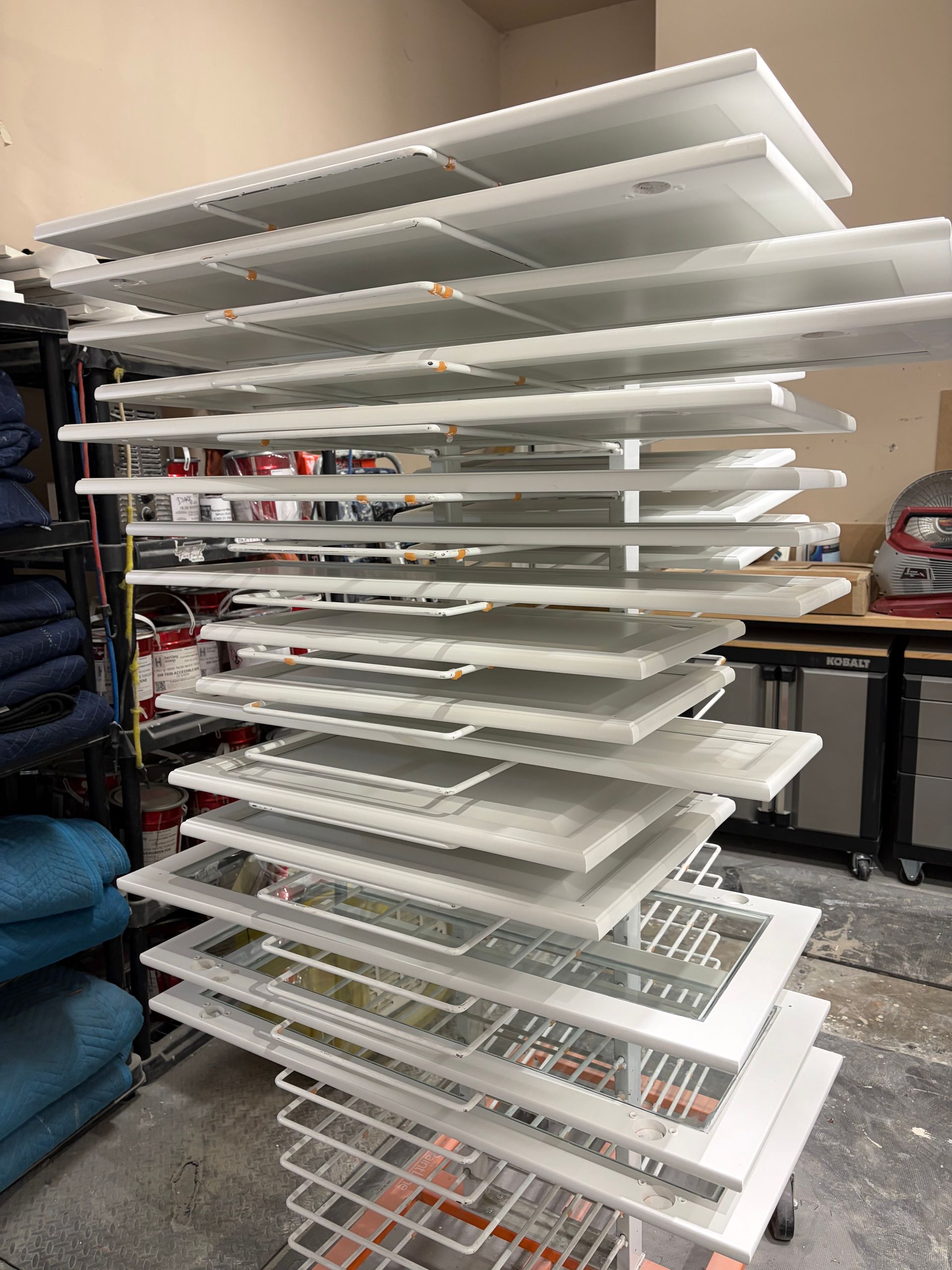
Making the decision to paint your own cabinets should not be taken lightly. Here are the most important things to consider before painting your own cabinets , whether they're kitchen, bathroom or built-ins. These points will help you avoid the most common and costly mistakes and help you decide whether it's a DIY project worth tackling. Cabinet Material : Different substrates require different approaches Solid wood: can be sanded and repaired easily but you should know which wood species you're painting as some have naturally occurring compounds, called tannins, that will bleed through each layer of wood coating if not properly sealed. Oak, pine and cherry are some of the worst offenders and can be very difficult to block tannins. Special knowledge and product application is required to block the bleeding. MDF: paints easily but shouldn't be sanded. Must be sealed properly as to prevent water swelling from occurring. MDF is used to make one piece doors and drawers which have no joints. Laminate/Thermafoil: If thermafoil is failing, it (and the adhesive underneath) must be removed exposing the MDF core which must be properly sealed prior to painting. Veneer: can be lightly sanded and painted if it's in good condition. If it's peeling, it should be replaced prior to painting. Mixed/Combination: Solid wood frame with an MDF middle panel is a very common 5-piece door option but must be prepped, sanded, sealed and sprayed in a special way to avoid bridging (paint going in the gaps around the frame). Your Paint Job is Only as Good as Your Prep! 80% of the hard work of refinishing is on the front end of cleaning, repairing, and sanding. Special knowledge of proper cleaning agents is required along with the worthwhile investment of an electric sander designed specifically for refinishing is a must. Expect to spend at least 8-12 hours on cleaning and 8-10 hours for sanding the doors and drawers alone. An average kitchen can be prepped by one person in a day. Critical prep steps include: labeling & removing all doors/drawer fronts degreasing all items to be painted including the carcass sanding/deglossing (do NOT use a liquid deglosser) filling/repairing scratches, dents, holes with wood filler or glazing putty reclean with solvent and vacuum to remove any remaining contaminants Skipping prep steps or not doing thoroughly is the #1 reason for paint failure! Choosing the Right Products for Longevity Primer: Primer is the foundation of a good paint job and must be chosen carefully. Different types do different things. Blocking primers for tannin rich woods and bonding primers to enhance adherence to substrate. Water-based, oil and shellac-based primers all serve different purposes and must be compatible with the topcoat you'll be using. Topcoat: with so many choices, topcoat must be compatible with whatever primer you're using. Proper cabinet grade wood coatings can be water-based or solvent-based. If working with solvent-based, special personal protective gear and equipment is required for safety purposes. Most retail products will not be as durable as a professional product. 1k or 2k: wood coating can be applied straight out of the can as a 1 component paint or a catalyst can be added to the paint to make it more durable. 2k wood coatings are designed to be applied by spraying. You can roll out or brush 1k wood coatings but leveling ability will be dependent on brand of paint used. Don't take short-cuts and choose a paint and primer in one! Know the difference between different paint types before starting as there's a vast difference is durability amongst the following: Acrylic enamel: retail grade Alkyd enamel: retail grade Acrylic urethane: retail grade Polyurethane: professional grade Oil: old technology, high VOC Lacquer: professional Conversion Varnish: professional Tools & Equipment Required Cleaning tools like dental picks, brushes, putty knives Electric sanders and block sanders: invest in decent handheld sanders to make job faster & easier and cut down on sanding down/ruining edges. Professional sanders cost over $300 plus another $700 for the vacuum. Air compressor for dust removal Spray booth or homemade containment area Drying racks Air scrubbers/air filtration Sprayers: airless, air assisted or HVLP knowledge and skill base in which sprayer to use and how to properly spray Rollers, brushes, caulk, and wood fillers are all common tools required Improper tools and improper technique will lead to a streaks, orange peel finish, drips, and under/over application. Drying & Curing Time Dry and cure times vary per paint manufacturer but typically take 12-24hrs to dry and 30 days to fully cure. Professional products are quick drying, can be stacked within hours and reinstalled in a fraction of time. If painting your own cabinets, you'll need a proper set up to adequately allow for drying time. Professionals use drying racks or will vertically hang items to spray. UV light technology can also be used to speed cure time. Color Consideration Choosing the perfect color is a big decision and one you want to get right the first time. If you struggle with color coordination, it's best to pay a professional to guide your decision whether it's an interior designer or cabinet refinisher like A La Carte Cabinet Painting that offers expert color consultations. Kitchen Function Disruption Choosing to paint your own cabinets will take substantially longer than a professional company leading to chaos in the kitchen and frustration for family members. Most professionals can finish a kitchen under a week from start to finish. You'll need a place to store & dry doors/drawers You'll need to cook around a partial renovation You'll need to deal with the smell/fumes of paint used You'll need a dust-free area for spraying and drying Longevity of Paint Job Professionally finished jobs typically last 7+ years with few touchups required, DIY jobs can have early failure due to improper prep, process and products used. The Spruce asked designers which home decor "quick fix" shortcuts seem smart but ended up backfiring and DIY cabinet painting was one of the biggest offenders! https://www.thespruce.com/which-quick-fixes-always-backfire-11820031 Your Comfort Level with Attention to Detail Cabinet painting is tedious and requires an enormous attention to detail. Details are what make a paint job look good. If you don't enjoy meticulous work, it may be best to outsource the work! DIY Cost vs Profession Doing it yourself will still cost you money but can be significantly less than hiring a professional. With that said, there's still the opportunity cost, rental equipment or purchasing tools/equipment and your time. An average size kitchen will cost at least 1k if you after tools and paint cost. Hiring a professional will cost you at least $3500+ depending on products and process used. Spraying a carcass will always cost significantly more due to extra skilled labor and material costs required. If you're okay with lots of labor to save money, than DIY may be worth it to you! At A La Carte Cabinet Painting you don't have to choose between DIY or Professional because we offer the best of both worlds! Our unique Homeowner Labor Discount and P.Y.O.B. (Paint Your Own Boxes) programs allow homeowners the option to save money by doing some of the easier tasks themselves like cleaning, unhanging and reinstallation while we handle the spraying for professional looking results. Most of our clients save about 10-20% of the project cost with the Homeowner Labor Discounts. We even teach homeowners how to paint their own cabinet boxes with our P.Y.O.B. tutorial program. We give you all the knowledge and supplies required to help you save about 50% off your cabinet painting job!