Sheen & Shine

Heather Perkins • August 13, 2023

Choosing the right sheen for your cabinets
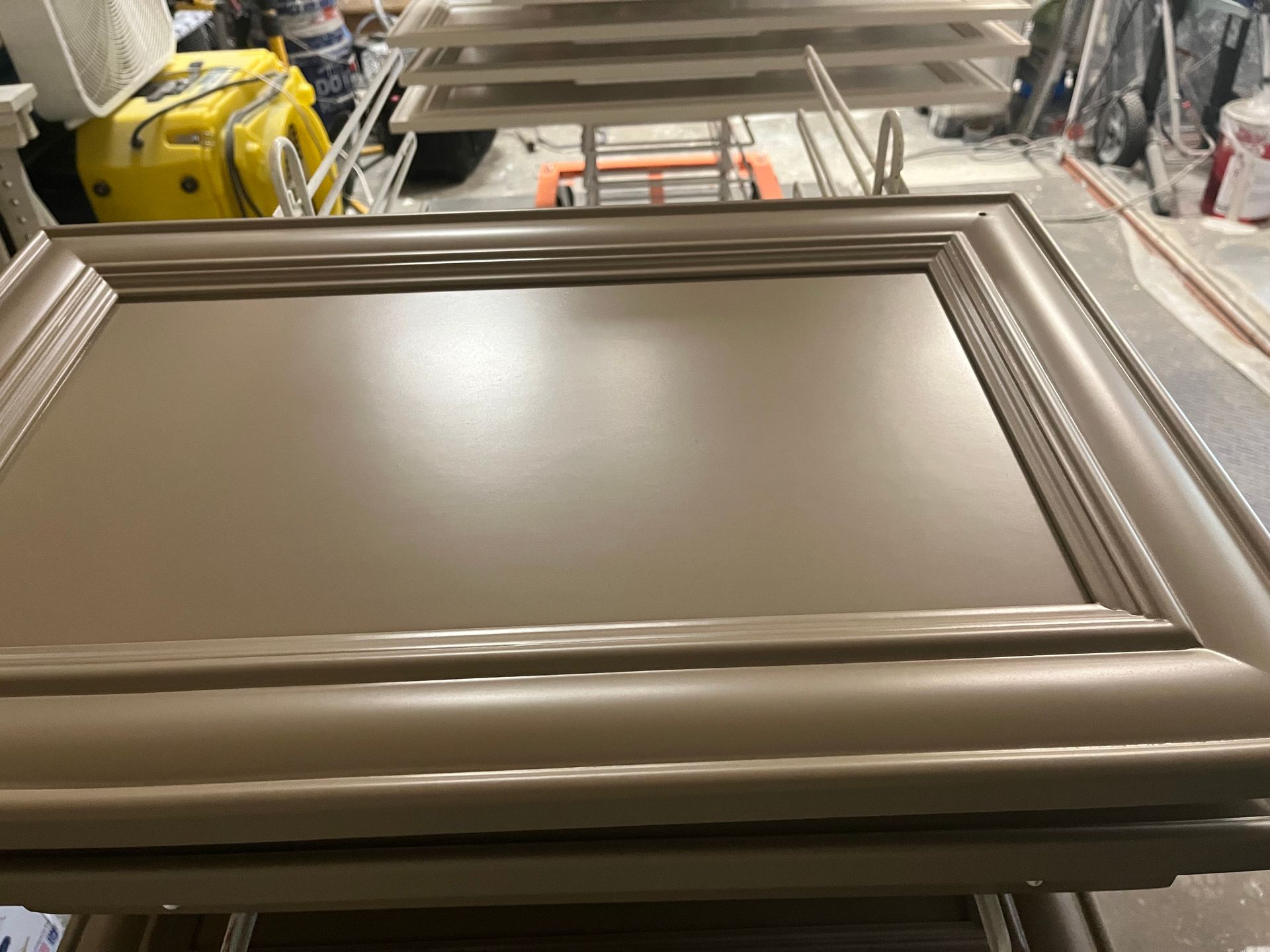
ICRO satin finish

From glossy to matte, choosing the right paint sheen or finish for your cabinets can be a big decision where there are several factors to consider. Before we get into the how-to', let's give you a bit of a background on what sheen is and how it's measured.


In a most recent edition of American Painting Contractor (APC) magazine, in an article entitled From Flat to Gloss, writer Jerry Rabushka interviewed Mike Mundwiller, Senior Manager of end-user product experience at Benjamin Moore.  Mike explains that  "sheen is a component of gloss, and gloss is an optical property that indicates how well a surface reflects light.  From a formulation perspective, gloss is determined by the pigment volume concentration.  PVC is a measure of how much volume there is in a paint compared to the volume of solid binder (vehicle).  The higher the pigment, the lower the sheen the paint will have." 


To complicate matters more, sheen levels can vary from manufacturer to manufacturer, so Benjamin Moore's satin sheen may be a lot shinier than ICRO's satin sheen.  For this reason, paint manufacturer's gauge sheen by numbers that measure the amount of gloss and sheen.  Gloss is measured at 60 degrees and sheen is measured at 85, which are both measurements read perpendicular to the substrate according to Mundwiller.  In the same article, Rabushka interviewed PPG's director of portfolio management, John Salvadore.  John gives insight into distinguishing the differences in sheen measurements. He states that "numbers are used to measure the reflectiveness of light on a painted surface and will differ across sheens for the same product. In PPG Prominence Interior Paint flat sheen is measured at 1-3 @ 60 & 85 degrees. The same product in satin sheen measures at 10-20 @ 60 degress or 20-35 @ 85 degrees." 


To simplify things,  the lower the gloss unit number (GU), the less shiny the sheen.  For example, ICRO's newest sheen on the market called Soft Matt has a very low 2 GU making it not shiny at all, while it's satin finish has a GU of 10 making is slightly shiny and ICRO's "gloss" finish has a GU of 30 which is what one would think of as a semi-gloss.  There are some manufacturer's with high gloss finishes in the 60's-80's giving a super shiny yacht-looking apprearance.


We know this is a lot of technical information, so what should you consider when picking out your cabinet finish

  • First, think about the overall style and aesthetic of your kitchen as well as latest cabinet trends. A high-gloss sheen adds a modern and sleek look, while a satin or semi-gloss finish provides a more traditional and timeless appeal.  In recent years, homeowners are opting for less shine and satin finishes are extremely popular with younger generations.
  • Next, consider the level of durability you need. High-gloss finishes can be more resistant to scratches and stains, making them ideal for busy households. On the other hand, satin or semi-gloss sheens are easier to maintain and touch up.
  • Cleanability is another factor to consider.  Typically, the glossier the finish, the easier it is to clean.  If your a household that uses a lot of spices when you cook that may stain your cabinets, considering a glossier finish may be a wise thought. 
  • Lastly consider the lighting in your kitchen. Higher sheen levels reflect more light, creating a brighter and more spacious feel.  If you have a smaller kitchen with darker lighting a higher sheen may work well.


At A La Carte Cabinet Painting, we offer expert advice and a variety of sheen options in our Italian wood coatings to help you achieve the perfect look for your cabinets.

Share Post
By Heather Perkins December 5, 2025
Making the decision to paint your own cabinets should not be taken lightly. Here are the most important things to consider before painting your own cabinets , whether they're kitchen, bathroom or built-ins. These points will help you avoid the most common and costly mistakes and help you decide whether it's a DIY project worth tackling. Cabinet Material : Different substrates require different approaches Solid wood: can be sanded and repaired easily but you should know which wood species you're painting as some have naturally occurring compounds, called tannins, that will bleed through each layer of wood coating if not properly sealed. Oak, pine and cherry are some of the worst offenders and can be very difficult to block tannins. Special knowledge and product application is required to block the bleeding. MDF: paints easily but shouldn't be sanded. Must be sealed properly as to prevent water swelling from occurring. MDF is used to make one piece doors and drawers which have no joints. Laminate/Thermafoil: If thermafoil is failing, it (and the adhesive underneath) must be removed exposing the MDF core which must be properly sealed prior to painting. Veneer: can be lightly sanded and painted if it's in good condition. If it's peeling, it should be replaced prior to painting. Mixed/Combination: Solid wood frame with an MDF middle panel is a very common 5-piece door option but must be prepped, sanded, sealed and sprayed in a special way to avoid bridging (paint going in the gaps around the frame). Your Paint Job is Only as Good as Your Prep! 80% of the hard work of refinishing is on the front end of cleaning, repairing, and sanding. Special knowledge of proper cleaning agents is required along with the worthwhile investment of an electric sander designed specifically for refinishing is a must. Expect to spend at least 8-12 hours on cleaning and 8-10 hours for sanding the doors and drawers alone. An average kitchen can be prepped by one person in a day. Critical prep steps include: labeling & removing all doors/drawer fronts degreasing all items to be painted including the carcass sanding/deglossing (do NOT use a liquid deglosser) filling/repairing scratches, dents, holes with wood filler or glazing putty reclean with solvent and vacuum to remove any remaining contaminants Skipping prep steps or not doing thoroughly is the #1 reason for paint failure! Choosing the Right Products for Longevity Primer: Primer is the foundation of a good paint job and must be chosen carefully. Different types do different things. Blocking primers for tannin rich woods and bonding primers to enhance adherence to substrate. Water-based, oil and shellac-based primers all serve different purposes and must be compatible with the topcoat you'll be using. Topcoat: with so many choices, topcoat must be compatible with whatever primer you're using. Proper cabinet grade wood coatings can be water-based or solvent-based. If working with solvent-based, special personal protective gear and equipment is required for safety purposes. Most retail products will not be as durable as a professional product. 1k or 2k: wood coating can be applied straight out of the can as a 1 component paint or a catalyst can be added to the paint to make it more durable. 2k wood coatings are designed to be applied by spraying. You can roll out or brush 1k wood coatings but leveling ability will be dependent on brand of paint used. Don't take short-cuts and choose a paint and primer in one! Know the difference between different paint types before starting as there's a vast difference is durability amongst the following: Acrylic enamel: retail grade Alkyd enamel: retail grade Acrylic urethane: retail grade Polyurethane: professional grade Oil: old technology, high VOC Lacquer: professional Conversion Varnish: professional Tools & Equipment Required Cleaning tools like dental picks, brushes, putty knives Electric sanders and block sanders: invest in decent handheld sanders to make job faster & easier and cut down on sanding down/ruining edges. Professional sanders cost over $300 plus another $700 for the vacuum. Air compressor for dust removal Spray booth or homemade containment area Drying racks Air scrubbers/air filtration Sprayers: airless, air assisted or HVLP knowledge and skill base in which sprayer to use and how to properly spray Rollers, brushes, caulk, and wood fillers are all common tools required Improper tools and improper technique will lead to a streaks, orange peel finish, drips, and under/over application. Drying & Curing Time Dry and cure times vary per paint manufacturer but typically take 12-24hrs to dry and 30 days to fully cure. Professional products are quick drying, can be stacked within hours and reinstalled in a fraction of time. If painting your own cabinets, you'll need a proper set up to adequately allow for drying time. Professionals use drying racks or will vertically hang items to spray. UV light technology can also be used to speed cure time. Color Consideration Choosing the perfect color is a big decision and one you want to get right the first time. If you struggle with color coordination, it's best to pay a professional to guide your decision whether it's an interior designer or cabinet refinisher like A La Carte Cabinet Painting that offers expert color consultations. Kitchen Function Disruption Choosing to paint your own cabinets will take substantially longer than a professional company leading to chaos in the kitchen and frustration for family members. Most professionals can finish a kitchen under a week from start to finish. You'll need a place to store & dry doors/drawers You'll need to cook around a partial renovation You'll need to deal with the smell/fumes of paint used You'll need a dust-free area for spraying and drying Longevity of Paint Job Professionally finished jobs typically last 7+ years with few touchups required, DIY jobs can have early failure due to improper prep, process and products used. The Spruce asked designers which home decor "quick fix" shortcuts seem smart but ended up backfiring and DIY cabinet painting was one of the biggest offenders! https://www.thespruce.com/which-quick-fixes-always-backfire-11820031 Your Comfort Level with Attention to Detail Cabinet painting is tedious and requires an enormous attention to detail. Details are what make a paint job look good. If you don't enjoy meticulous work, it may be best to outsource the work! DIY Cost vs Profession Doing it yourself will still cost you money but can be significantly less than hiring a professional. With that said, there's still the opportunity cost, rental equipment or purchasing tools/equipment and your time. An average size kitchen will cost at least 1k if you after tools and paint cost. Hiring a professional will cost you at least $3500+ depending on products and process used. Spraying a carcass will always cost significantly more due to extra skilled labor and material costs required. If you're okay with lots of labor to save money, than DIY may be worth it to you! At A La Carte Cabinet Painting you don't have to choose between DIY or Professional because we offer the best of both worlds! Our unique Homeowner Labor Discount and P.Y.O.B. (Paint Your Own Boxes) programs allow homeowners the option to save money by doing some of the easier tasks themselves like cleaning, unhanging and reinstallation while we handle the spraying for professional looking results. Most of our clients save about 10-20% of the project cost with the Homeowner Labor Discounts. We even teach homeowners how to paint their own cabinet boxes with our P.Y.O.B. tutorial program. We give you all the knowledge and supplies required to help you save about 50% off your cabinet painting job!
By Heather Perkins October 3, 2025
Damaged MDF: Should You Repair or Replace? MDF, or Medium Density Fiberboard, is a popular material in cabinetry due to its smooth finish and versatility. However, over time and with exposure to moisture, wear, and tear, MDF can become damaged. When faced with damaged MDF, homeowners often grapple with a crucial decision: should they repair or replace the affected pieces? This article explores the factors to consider when making this choice, ensuring your cabinetry remains functional and aesthetically pleasing. #### Overall Age of Existing Cabinetry One of the first considerations is the age of your cabinets. If your cabinetry exceeds 12 years, it may be wise to evaluate whether repair is worth the investment. Older cabinetry might not only show visible damage but also lack modern conveniences that newer models offer. For instance, if your MDF doors currently utilize exterior hinges, you could opt for new doors that accommodate concealed hinges, providing a sleeker look. Furthermore, upgrading to a soft-close feature can enhance usability, making everyday life just a little bit easier. Therefore, if your cabinetry is aging, consider replacing damaged items as an opportunity to modernize your space. #### Amount and Severity of Damage The extent and severity of the damage are also pivotal in making your decision. If only a few pieces are affected and the damage is minimal, repairing may be a feasible option. This typically involves a detailed process where a refinisher removes the existing thermfoil and its adhesives, carves out any swollen or damaged areas, and fills them with Bondo or epoxy. While these repairs require skilled labor and can be costly, they often result in a restored appearance without the need for full replacement. Conversely, if numerous cabinets exhibit damage or the deterioration is severe, replacing doors and drawers could prove more practical in the long run. #### Budget Considerations Budget constraints play a vital role in any home improvement decision. Refacing an entire kitchen tends to cost significantly more than simply painting existing cabinetry. If you find yourself with only a couple of damaged items, consult a refinisher about matching the trim profile for specific replacements. However, if matching is impossible, you'll need to weigh the viability of repairing the damaged MDF against refacing the entire kitchen. A thorough assessment of your budget will help guide your choice, ensuring you achieve the best results without overspending. #### Professional Guidance for Your MDF Needs If you’re uncertain about the best course of action for your damaged MDF cabinets, consider seeking the advice of professionals. Companies like A La Carte Cabinet Painting can provide insights tailored to your unique situation. They will assess the condition of your cabinetry, discuss available options, and help you make an informed decision that aligns with your aesthetic and financial goals. In conclusion, deciding whether to repair or replace damaged MDF cabinetry hinges on several factors, including the age of your existing cabinets, the extent of the damage, and your budget. By carefully weighing these elements, you can choose the best solution for your home. Don't hesitate to reach out for expert guidance to ensure your cabinetry remains beautiful and functional for years to come. Schedule a free consultation today and discover how to breathe new life into your cabinetry!
By Heather Perkins June 28, 2025
Adding color to your cabinets is a big decision and one that defines the look of your space. While choosing a trending color can be tempting, it often creates a look that feels temporarily "updated" rather than timeless. Making a long-lasting, thoughtful color cam feel daunting, but it doesn't have to be. In this guide, we'll explore some upcoming design trends and color suggestions that may align perfectly with your future cabinet painting project! Color Trend Forecast: A Return to Warmth Color trend prediction isn't a hard science-it's an evolving blend of industry insight, expert intuition and countless hours of cultural and market research. Trends are cyclical; what's old often becomes new again. In recent years, we've seen the rise of bright whites and cool tones dominating design, especially in kitchens---think clean lines, circular silhouettes, Taj Mahal quartzite countertops, and Chantilly Lace bright white cabinetry. However, a subtle but steady shift is underway. Consumers are beginning to move away from stark, high-contrast whites and cool minimalism. In their place, we're seeing a growing embrace of warmer, softer off-white and greige tones that evoke comfort and character without sacrificing brightness. Looking ahead to this year and beyond, the future of interior design is leaning toward warmth, personality, and a sense of intimacy. Spaces are becoming more inviting, personal, and emotionally resonant-less showroom-perfect and more lived-in and loved. Below is a list of some of our all time favorite colors that exude warmth characterized by color family: Blacks & Browns #1. Sherwin Williams Urbane Bronze : a rich dark grounding greige with green leaning #2. Sherwin Williams Black Fox : a beguiling black neutral with a warm greige undertone #3. Benjamin Moore Dragon's Breath : a deep dark gray-brown with a touch of green #4. Benjamin Moore Wrought Iron : a popular accent color with slight purple undertone #5. S herwin Williams Black Magic : warm, timeless and sophisticated black Off Whites #1. Benjamin Moore Swiss Coffee : with a light reflectance value of 83, this beige leaning off white goes perfect with warm granites #2. Benjamin Moore Seapearl: slightly darker than it's brother color Swiss Coffee, this versatile off white can lean a little cool too #3. Benjamin Moore Ballet White : more warm depth but not a yellow white. #4. Sherwin Williams Alabaster: a popular choice for soft white cabinets keeping your look bright but inviting #5. Benjamin Moore White Dove : a top contender for its neutrality this color is similar to Swiss Coffee but less beige. Light Greiges #1. Benjamin Moore Edgecomb Gray : timeless, earthy organic taupe greige with hints of beige and green #2. Benjamin Moore Revere Pewter: an iconi. c neutral color that adapts beautifully to its environment #3. Benjamin Moore Classic Gray : ultra light greige that behaves more like an off white #4. Magnolia Homes Gatherings: this is a golden gray with amber, beige and a wink of green undertones #5. Benjamin Moore Pale Oak: a light neutral taupe greige with subtle purple-pink undertones When considering your palette, warm greens with earthy leanings are especially grounding and soothing like Benjamin Moore's Dark Olive or Sherwin Williams Night Owl . For a more dramatic and saturated statement consider incorporating a deep sophisticated burgandy like Farrow and Ball's Brinjal . This evokes depth and warmth and pairs symbiotically with accents of burnished gold, warm natural woods and fabrics with hints of red or gray undertones. To add a touch of classic coolness, a refined blue like Benjamin Moore's Britannia Blue can be striking. It balances wonderfully when anchored with warm neutrals like Revere Pewter, offering a harmonious blend of warmth and contrast across the space. At A La Carte Cabinet Painting, we offer complementary expert color guidance for our clients, helping them choose the perfect hue for your space---creating a timeless and personalized look that reflects their unique style. Need help picking the perfect cabinet color? Book a free estimate and schedule a color consultation today! As the owner of A La Carte Cabinet Painting , Heather Perkins, has a Bachelor of Arts and a strong foundation in color theory staying attuned to evolving design trends to assist clients in creating spaces that are both timeless and on-trend.